For Orlando business owners weighing locksmith options, practical experience and clear expectations matter and this article provides them. I cover response times, costs you can expect, common commercial hardware, and how to vet an after-hours or 24/7 commercial locksmith in Orlando. These notes come from years of on-site locksmith work on storefronts, office suites, and property manager issues, so they reflect real tradeoffs and common pitfalls.
What to expect from a commercial locksmith in Orlando.
Commercial locksmiths handle tasks that go beyond a front-door residential job. Typical commercial jobs include installing, servicing, and repairing mortise locks, exit devices, panic hardware, master key systems, and electronic access control. Experienced techs will also install and troubleshoot door closers, electric strikes, magnetic locks, and access control wiring.
A proper commercial locksmith knows building and fire codes that affect hardware choices and placement. Incorrect installation of exit devices or panic hardware carries legal and safety risk and will likely fail inspection. A skilled locksmith will ask about occupancy type, egress routes, and existing master key systems before providing a firm quote.
Response expectations and emergency service realities.
Response time for emergency commercial service depends on dispatcher load, time of day, and how close a mobile technician is. In downtown Orlando expect roughly 20 to 40 minutes for urgent work, while suburban calls often take 45 to 90 minutes, depending on traffic and shift coverage. For life-safety faults, label the request as priority, document the hazard, and require a temporary compliant solution while planning a permanent repair.
Expect overtime and travel premiums for calls placed outside normal business hours, which is why having negotiated after-hours terms in advance is helpful. Transparent providers explain all callout and overtime fees before performing emergency service, which avoids billing surprises.
How to vet and verify a commercial locksmith in Orlando.
Request the company's business registration and a verifiable service address instead of just a mobile phone number. Make sure the company can produce a certificate of insurance that lists general liability and worker compensation, especially for on-site work. If you manage multiple buildings, insist the company add you as a certificate holder so your risk department can sign off quickly.
Check locally focused reviews and ask for references from similar commercial jobs rather than only residential work. Make sure they have hands-on experience with your particular brands, such as Lenel or Schlage Primus, and with electrified exit devices. A good firm will offer proof of factory certifications or manufacturer-authorized training for access control or electronic locking systems.
Pricing expectations and billing practices to watch for.
Costs vary by job size, hardware grade, and timing, especially when service is required after normal hours. As a ballpark, a technician call during business hours for a simple cylinder change or rekey might be $120 to $250 in labor plus parts. More complex jobs, like installing an electrified lockset or a small access control panel, tend to start in the $600 to $1,500 range when labor and parts are combined.
After-hours emergency calls often carry a callout fee of $75 to $200 plus an elevated hourly rate in many markets. Avoid invoice surprises by negotiating emergency rates and service tiers up front and capturing them in a vendor contract. Get a written quote for substantial jobs and insist that any temporary compliance measure be documented so it does not become permanent by oversight.
Common mistakes property managers make and how to avoid them.
A frequent error is hiring the cheapest responder without checking for commercial credentials and insurance. Leaving a temporary shim or quick fix in place for months is a frequent problem that increases liability and wear. Make follow-up scheduled repairs a policy and put them on a maintenance calendar with reminders for the vendor and your team.
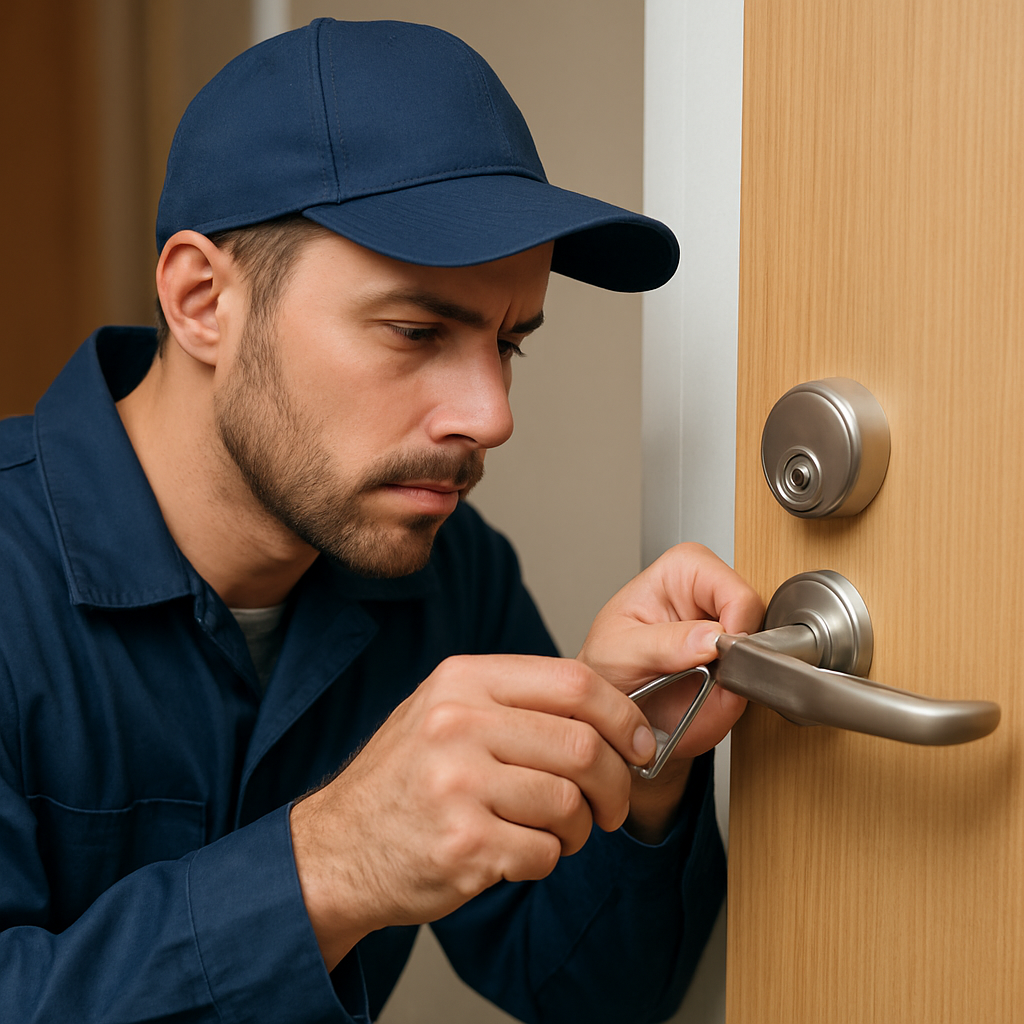
Avoid reliance on verbal quotes, because they often leave out hardware specifics and lead to surprises at install. Insist that the proposal lists exact part numbers and finish choices and includes delivery timelines for special items. Small technical mismatches such as wrong backset or core format change the installation and the price, so verify fitment before approving work.

When and why to upgrade commercial locks and access control.
A well-designed master key system simplifies key control across multiple doors and locations and makes rekeys less disruptive. Electronic access control becomes worth the investment when staff churn is high or you need audit trails for who entered high-value areas. Upgrading to ANSI grade 1 or grade 2 commercial hardware increases durability for high-traffic doors and reduces replacement frequency.
Electrified exit devices with delayed egress can control flow while meeting code when installed and programmed properly. Look at networked access readers that use Power over Ethernet to cut down on separate low-voltage cabling and simplify installation. Expect the locksmith to explain tradeoffs between wiring cost, cloud subscription fees, and local versus cloud control of access https://locksmithunit.com/locksmith-ucf-fl/ systems.
Paperwork and policies that reduce risk.
Record each service event with date, tech name, exact work done, parts used with numbers, and any follow-up needed. If keys are issued, record recipient, key number, date, and any authorization document tied to the access level. For master key systems, keep a secure, centralized master key chart and limit who can access the master key blanks and code sheets.
Schedule regular exports of door event logs and store them according to your retention schedule for compliance and incident response. Pair hardware controls with policy, such as deactivating badges within 24 to 48 hours after termination to limit exposure from lost credentials.
Local vs national locksmiths, and why it matters.
A local mobile firm will often respond faster in-town and already know many of the building layouts and managers. National chains may have broader inventory and standardized pricing but sometimes dispatch from centralized call centers that add time. For ongoing maintenance contracts I prefer local firms with a mobile fleet and a documented plan for emergency backup coverage.
A hybrid approach works well: a local locksmith for routine and emergency needs plus broader vendors for manufacturer warranty or large-scale projects. Write response expectations and emergency commitments into vendor contracts so you can enforce performance metrics.
What to confirm before you hire a commercial locksmith.
Verify business registration, certificates of insurance, and three commercial references from the Orlando area. Require an itemized quote that lists exact parts, finishes, labor hours, and lead times for special-order items. Include emergency fees and SLA response windows in a written agreement so billing and expectations are clear during incidents.
Schedule quarterly or semiannual reviews with your vendor to review jobs, upcoming projects, and chronic problem areas. Train staff to verify exit hardware function and report faults immediately instead of waiting for periodic maintenance.
Balance affordability, guaranteed response, and hardware expertise, and make those expectations part of your service agreement to prevent common headaches. Requiring insurance, local references, and itemized proposals will reduce exposure and improve the speed and quality of service for your operations. If a recommendation sounds unclear, insist on seeing the exact parts and a plain-language explanation before signing off on work.